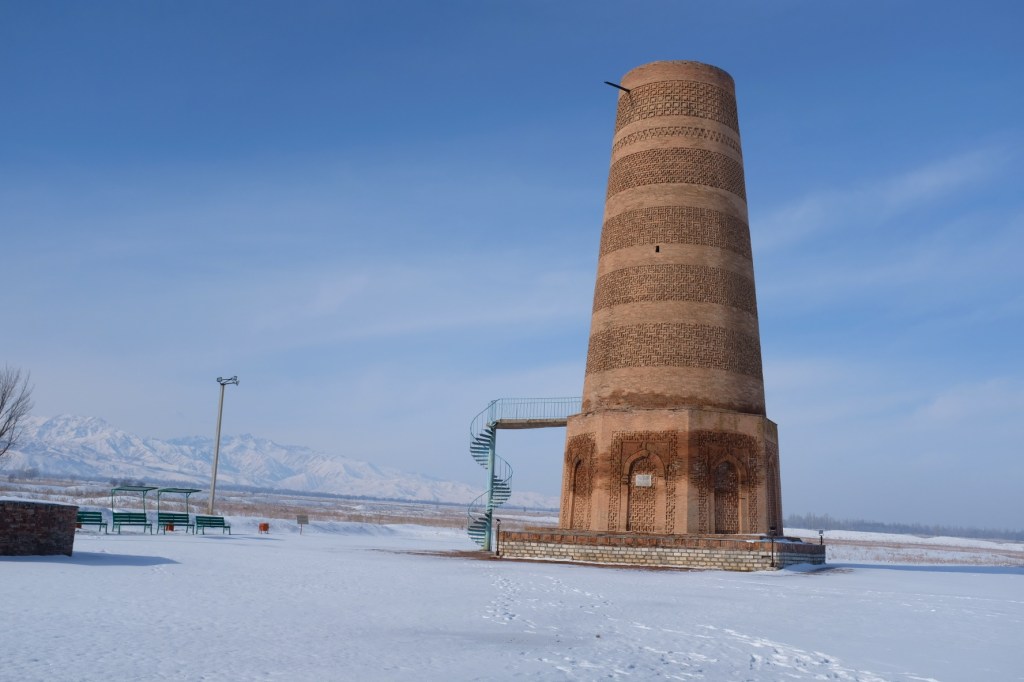
27 February 2025
Here is the first stop.
The car finally stopped, and Jack and Anuar hopped out, telling us to get out too. It was freezing cold, but the fresh air didn’t feel too bad. I stepped outside, and a thick layer of snow greeted my feet, which were just in sneakers. Let me warn you, sneakers are not for snow (but what do I know, I am just a little girl coming from a tropical country). Honestly, I wasn’t ready for this kind of season; I totally didn’t expect snow (plus, I had no idea what the trip was all about). So yeah, that was my bad. If I had known this was what we’d be doing, I would’ve prepared my outfit way better. Guess some lessons come the hard way.
The view is just as amazing as ever, with the road winding through the snowy mountain peaks, giving you a killer panorama that totally grabs your soul. It’s February, almost the end of the month, and winter is still going strong, covering everything in a fresh layer of white that sparkles in the sun. The air is super crisp and refreshing, filling my lungs with a chill that boosts my energy on every drive. Seriously, I can’t get enough! Each twist and turn of the road shows off new views, making every moment feel like a picture from a postcard, tempting me to hang out a bit longer in this winter wonderland.
The gate was still closed, and I couldn’t help but think, maybe we’re the first ones here—like a goofy adventurers having arrived before the rest of the tourists (ugh, I hate calling myself that, but here I am, the “tourist” in all my glory, haha). As I stood there soaking up the scene, my eyes landed on the conifers on either side of the gate (they are interesting conifer, I will write it up in different post), standing tall and proud like nature’s bouncers trying to keep out the riff-raff. Their branches swayed gently in the breeze. The air was thick with the smell of fresh pine, which made me feel all warm and fuzzy inside. Refreshing.
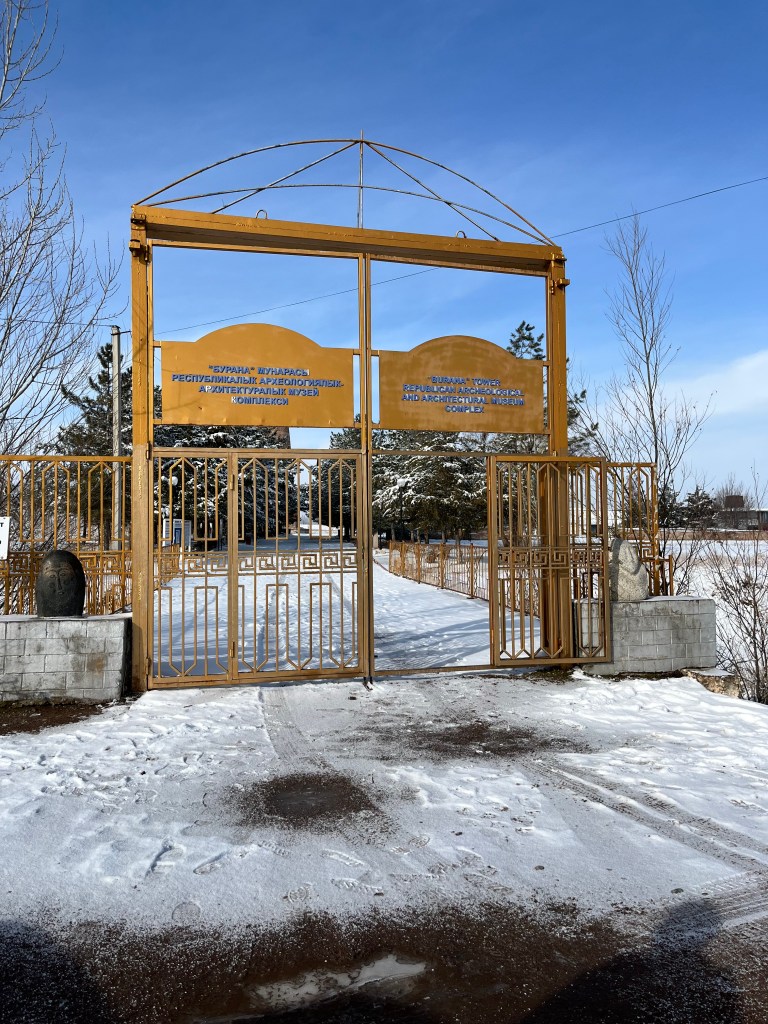
Fig 1. The gate~~
So there we were, finally through the gate! In front of me was an info board that looked like it had some Cyrillic or Kyrgyzstan letters that I couldn’t understand. It’s funny that I’ve always wanted to learn new languages, and now I’m adding “Mystery Alphabet” to my list. I think I saw a part in English too, but by the time I focused on it, everyone else was already ahead, leaving me behind like a forgotten slice of pizza at a party. I quickly took a picture of the board, telling myself I’d figure it out later (I didn’t), then ran to catch up with the guys, wondering what was waiting for us just ahead!
And there she is, standing tall in a white coverage land—the beautiful minaret in a red brick, a stunning architectural marvel that draws eyes from every corner. Listening (halfway) to what Jack said as the introduction of the place, I find myself marveling at the intricate details of the structure; wow, I am really bad at paying attention. It’s intriguing to think that just three years ago, I was still a student, navigating the labyrinth of assignments and exams, and somehow managed to make it to graduation. So you see, I did not really remember what Jack said (I am sorry, Jack), but here I put altogether the information that I got from different sources, trying to piece together a coherent picture of this fascinating place. Perhaps I should have taken notes or asked more questions, for there is so much history and culture to absorb here, and it feels like a missed opportunity to soak it all in first-hand (and again, sorry Jack haha)
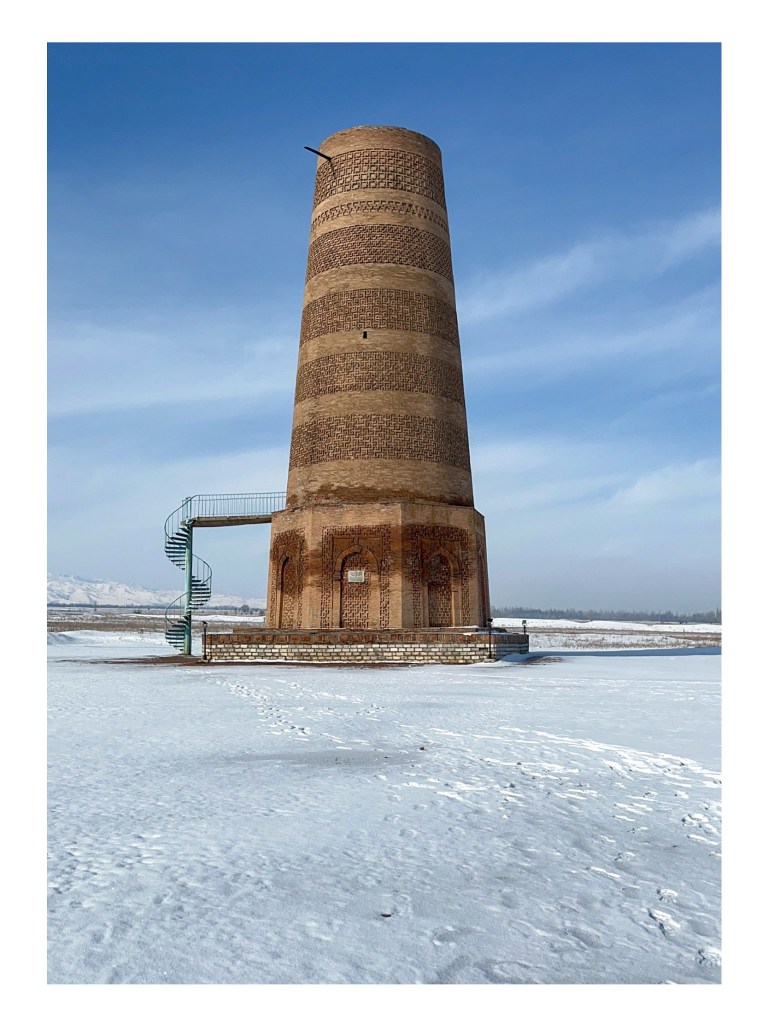
Fig 2. Standing tall in the cold winter
At first glance, this minaret screams for attention. Forget the ones I saw in Uzbekistan; this beauty has a striking mystery that is probably from long, long ago (noted that this site is protected under UNESCO’s natural heritage site), and honestly, that just ups the ante! What truly hooks me is the pattern that covers the surfaces—seriously, it’s like a tantalizing trap! It almost resembles a labyrinth where you might just lose yourself, intricately complex and begging to be explored. On that brisk winter morning, this tower stands defiantly against the snow-blanketed fields, with those imposing mountain peaks looming in the background.
Jack handed us a tiny slip of paper that looked like a fancy postage stamp—so pretty! I jammed it into my camera lens cover, completely missing Jack’s riveting introduction and backstory of the places—classic me! lol. I did catch a tidbit or two, but to fill in the gaps, I resorted to my trusty sidekick, Google, and here are the notes I made~
According to Jack, Burana Tower or Burana Minaret is an old architectural piece dating back to the late 9th-11th century. This minaret currently stands about 25 meters tall, which is half of the original size. We can go to the top of the minaret to oversee the surrounding landscape. At that time (end of February), it was covered in beautiful white snow. A metal ladder outside the building is an additional structure added later on; I am not sure what is at the “first floor,” but this slippery flight of stairs carries me to one third of the minaret and continues with totally dark and narrow stairs inside the minaret that are very steep. Anyway, I wonder if all minarets in Central Asia have a similar structure? Do all minarets in other countries in Central Asia also have the flight of stairs inside them? Burana Tower is part of archaeological sites that are historically important, which makes me curious. Let’s dive deeper.
Burana Tower
First, what is a minaret? A minaret is a tall spire commonly seen in Islamic architecture, utilized to summon individuals to prayer, known as the adhan. It may be attached to a mosque or stand independently as its own tower. These structures exemplify the Islamic heritage of a region, incorporating influences from Persian, Turkic, and Arab cultures. They embody the Islamic character of the community and serve as significant landmarks in urban and rural settings. Typically, one will find balconies or galleries situated near the top where the call to prayer is proclaimed. The designs of minarets can be quite varied; however, many feature intricate geometric and arabesque patterns that reflect the local artistic styles.
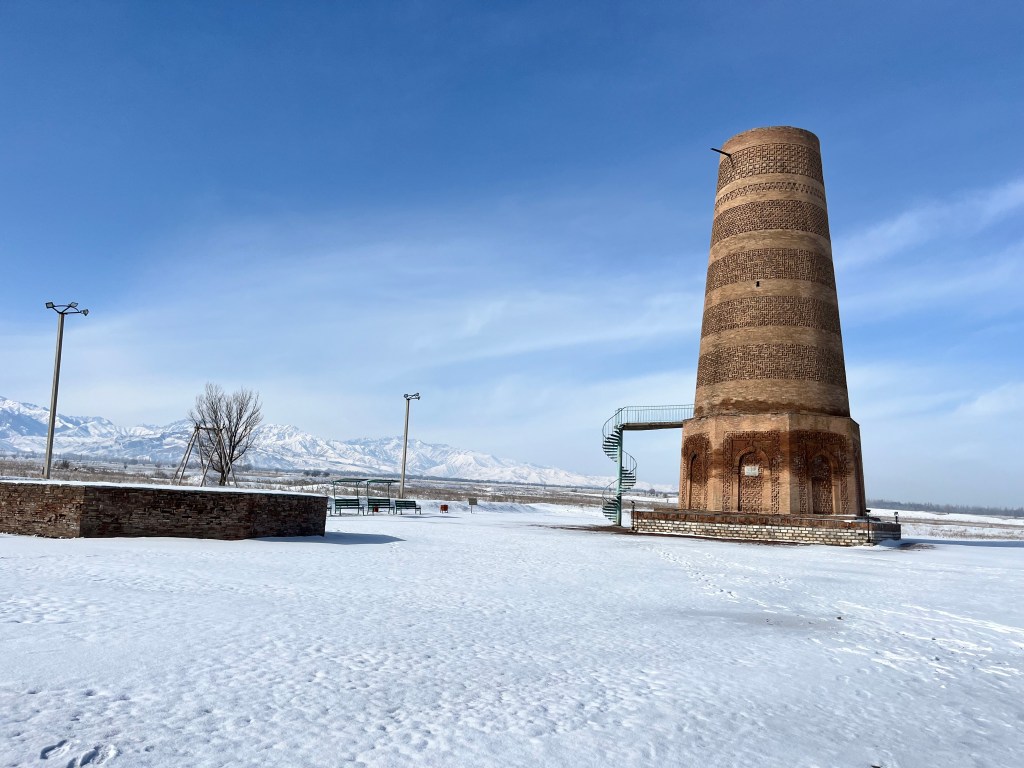
Fig 3. The pattern that hugs the tower looks more striking with the white backdrop
What is the history of Burana Tower? The Burana Tower, an iconic structure that stands as part of the ancient city of Balasagun, was a significant architectural achievement during the Kara-Khanid Khanate from the 9th to 13th centuries. As a minaret and watchtower, it not only served a practical purpose in guiding travelers along the Silk Road but also held immense cultural and religious significance within the community. Balasagun was an essential cultural and economic hub along this historic trade route, showcasing the rich Islamic architectural influence that flourished during this period. The intricacies of the tower’s design reflect the artistic endeavors of its time, characterized by beautifully crafted brickwork and ornamental details. Now recognized as a UNESCO World Heritage site, the tower symbolizes Kyrgyzstan’s rich medieval history and its vital role in the interconnected networks of trade and culture. The surrounding area is equally significant, featuring ancient petroglyphs that tell stories of the past, mausoleums that honor notable figures, and various archaeological remains that provide valuable insights into the region’s historical and cultural complexities. This makes Burana Tower not just a remarkable structure, but a testament to the vibrant life that once thrived in this part of Central Asia.
In summary, the Burana Tower is much more than an ancient monument; it is a vital symbol of Kyrgyzstan’s cultural identity, historical memory, and national pride. It connects past and present, helping Kyrgyz society celebrate its unique heritage while promoting unity and cultural revival
There are some cool legends and local stories about this tower/minaret, but honestly, I totally spaced out and didn’t catch them, plus can’t seem to find them online. So, if you’re curious, you should just swing by Kyrgyzstan yourself! I guarantee it’s reaaaaallly really worth it.
So, back to what we’re up to on this site, Jack took us to the top of Minareth. The stairs inside the minaret were pretty dark, but since I used to work in a cave (I am cave biologist), it felt pretty familiar to me. At the top of the minaret, you can see the whole area around—it’s really beautiful and gives off such a calming vibe. I was busy soaking in the views while the others were snapping pics. I love taking landscape shots and a few random selfies, and that’s usually enough for me. Some girls and their guide joined us, and while we were hanging out, I noticed some rocks that looked like tombstones. I asked Jack if they were graves, and that was actually one of the coolest parts of this place!
Balbals
So, after getting some cool drone footage for Joey and Karl, we headed down to check out these tombstones up close. There are seriously tons of them! They’re called balbals, and these gravestones were put up by the nomadic Turkic tribes that roamed around Central Asia back in the 6th century. At first, they were carved to honor fallen enemies, but over time, they turned into memorials for their ancestors. The balbals are pretty funky-looking, with weirdly shaped heads and short bodies, and they’ve got some amazing detailed carvings of faces and hands. They were crafted by some of the best stone carvers of their time and surprisingly, they’re still in great shape. The balbals we see here in Burana tower is the collection of Balbals that has been found all over Kyrgyzstan. And the balbals found in Kyrgyzstan actually date from the 6th to the 19th century.
In earlier times, it was believed that during the first year, the spirit of the deceased could reside in the balbal. The remains were kept in their yurts for a duration of one year before being transferred to the grave. These modest ancestral monuments served as important markers, aiding the living in recalling the burial sites of their loved ones, which was particularly useful given their nomadic lifestyle. All balbals are oriented toward the east, as their creators, who were shamans, held a reverence for the sky.
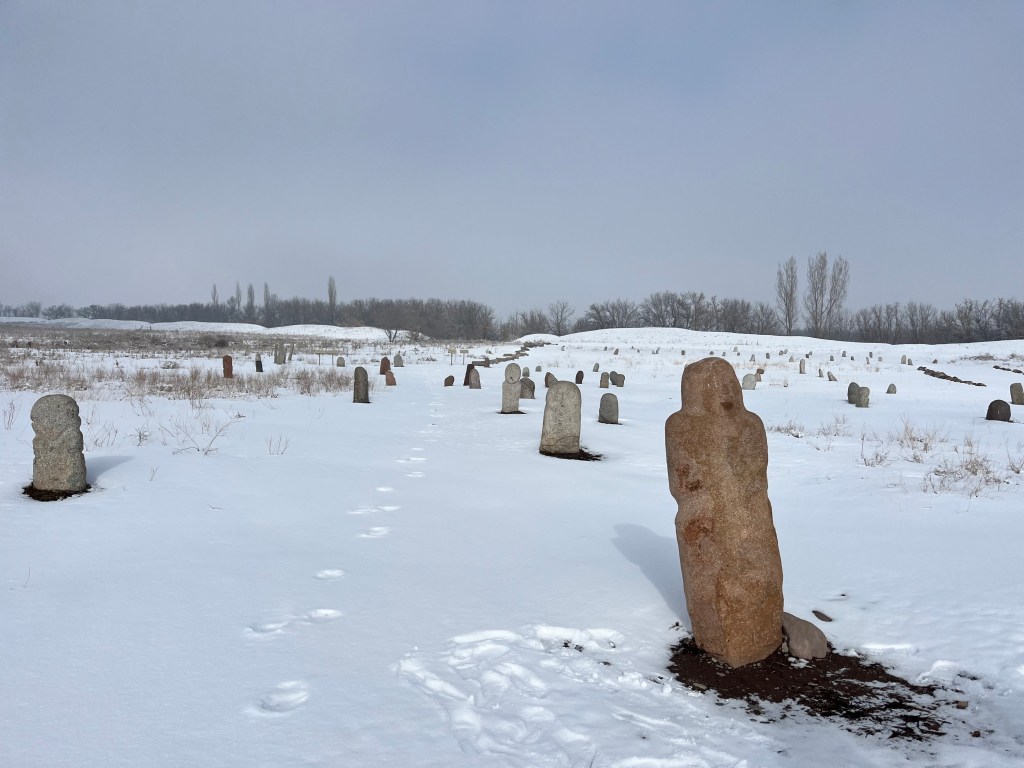
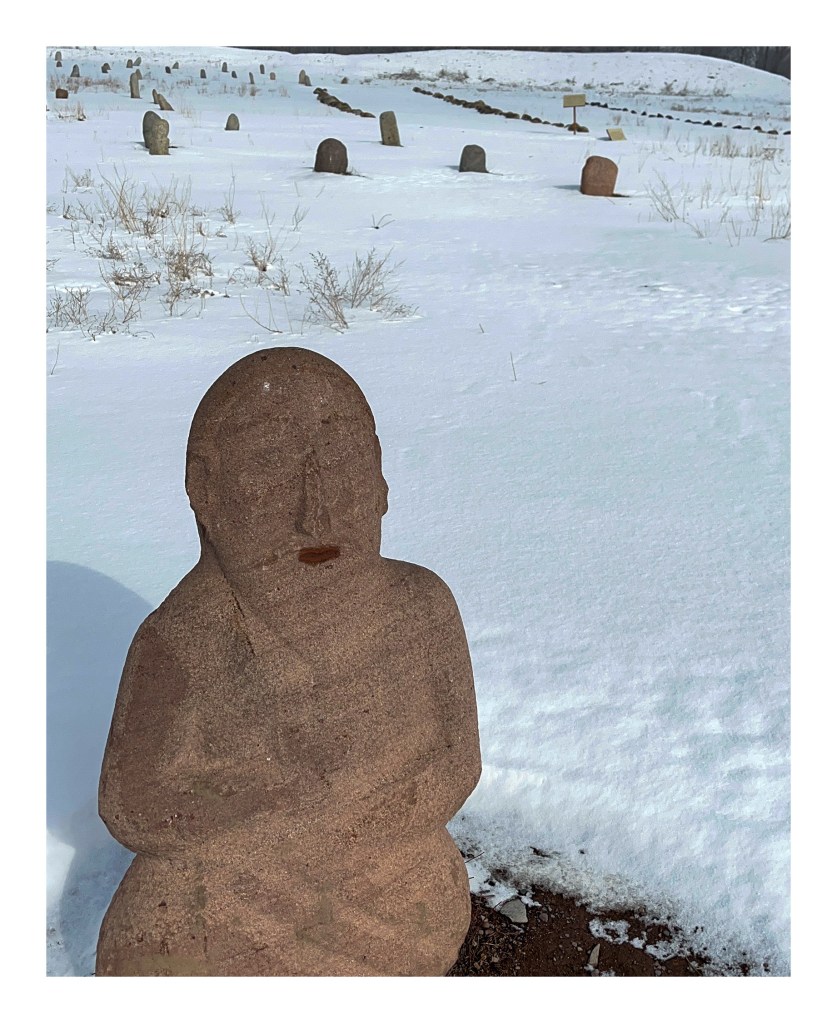
Fig 4. Field of Balbals. I think he is my favorite one; I noticed that the part in the lip is always wet, almost in every Balbal’s face that I see. It’s interesting—like why? Does anyone put water on it? intentionally?
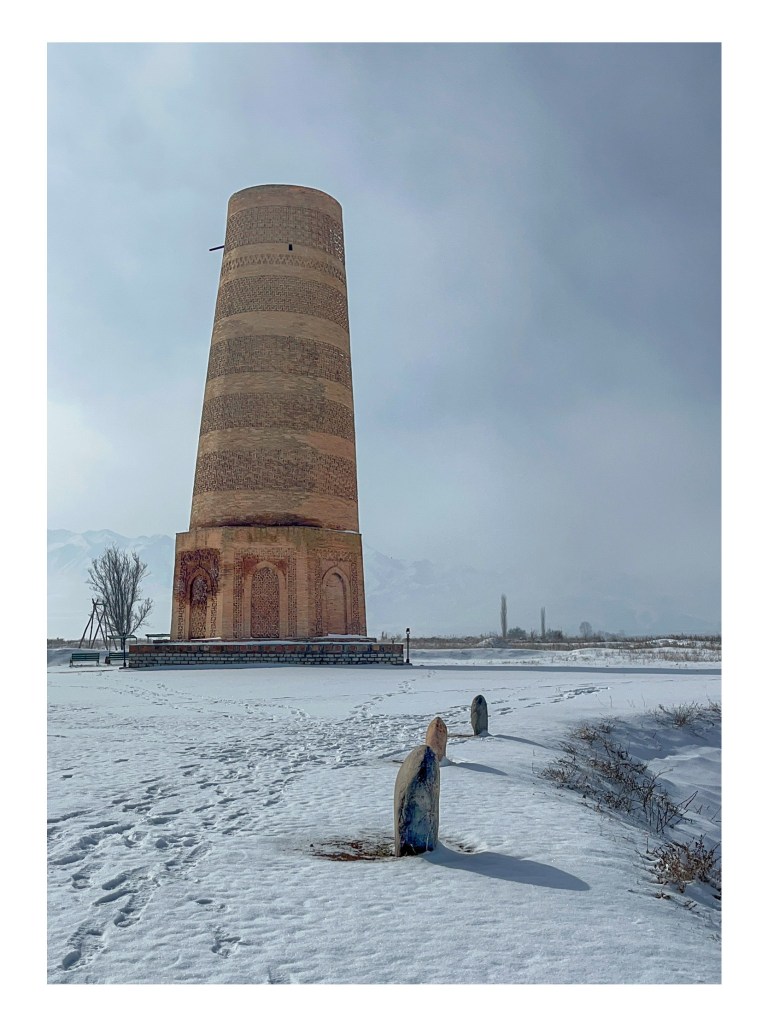
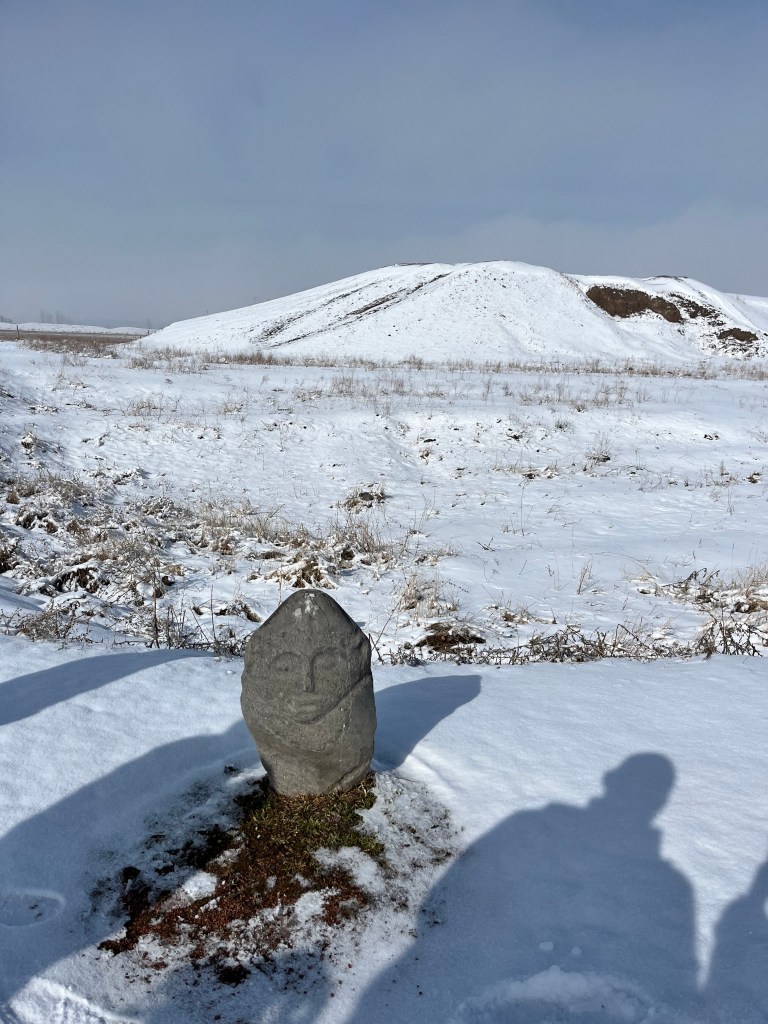
Fig 5. The mystery hill behind the balbals is a captivating sight; at its base, whispers of history can be felt in the cool breeze, inviting exploration and curiosity.
Between the Burana Tower and the Bal-Bals field, there’s this little hill around 10 meters tall, and people say it hides an old palace complex or temple from the 10th century, even before Balasagun. So far, no official digs have been done because there just isn’t enough funding for the project. Hopefully, that’ll change soon! This place definitely has a lot of historical and cultural value.
Standing in the middle of nowhere, the Burana Tower may seem utterly unimpressive at first glance, but once you realize that this forlorn site was once a bustling city revered as the center of the world, it becomes a mind-blowing experience to wander these ruins.
Some thought
Interesting things that I observed are that most of the balbal faces have wet lips, but only in the lip area. This peculiarity piqued my curiosity—why does this happen, and how is it possible? Is there some underlying reason that explains this phenomenon? Additionally, while browsing through photos of the Burana Tower on the internet, I noticed a similar characteristic; a particular part of the tower consistently appears to be wet, almost as if it has been recently exposed to moisture. What could be the cause of this persistent dampness? Is it related to the climatic conditions of the region, or perhaps due to the materials used in the tower’s construction? These questions linger in my mind as I search for explanations… WHY
REFERENCES
https://www.journalofnomads.com/burana-tower-kyrgyzstan/
https://kyrgyzstan-tourism.com/blog/burana-tower/
https://www.nomadays.com/destinations/kyrgyzstan/guide/burana-minaret
https://central-asia.guide/kyrgyzstan/destinations-kg/bishkek/burana-tower/
https://www.dailysabah.com/life/history/mysterious-round-shaped-tower-of-kyrgyzstan-burana
https://central-asia.guide/central-asia-guide/balbal-stone-statue/
https://www.livetheworld.com/post/balbals-the-nomadic-ancestral-monuments-of-central-asia-k306
*end
I’m currently engaged in a hilarious struggle with my eyelids, which have apparently formed a coup against my resolve to remain awake. Who would’ve thought that the day’s greatest contest would be trying not to turn my keyboard into a pillow? -Ada Chornelia


Leave a Reply